Second World is simply dummy text of the printing and typesetting industry. Lorem Ipsum has been the industry's standard dummy text ever since the 1500s, when an unknown printer took a galley of type and scrambled it to make a type specimen book. It has survived not only five centuries, but also the leap into electronic typesetting, remaining essentially unchanged. It was popularised in the 1960s with the release of Letraset sheets containing Lorem Ipsum passages, and more recently with desktop publishing software like Aldus PageMaker including versions of Lorem Ipsum.
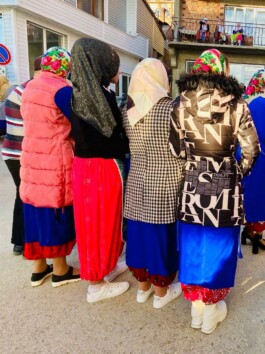


Kitsch in Bulgaria occupies a peculiar and revealing space—one that sits at the intersection of nostalgia, aspiration, irony, and unresolved historical tension. Often dismissed as tasteless or excessive, kitsch is more productively understood here as a visual language through which social transitions, economic desires, and cultural insecurities are negotiated. This exhibition approaches Bulgarian kitsch not as a failure of aesthetic judgment, but as a dense cultural artifact—one that reflects the shifting values of a society moving between socialism, post-socialism, and global capitalism.
The term “kitsch” typically evokes objects that are sentimental, ornamental, and mass-produced—items that privilege emotional immediacy over critical distance. In Bulgaria, however, kitsch carries an additional weight. It is inseparable from the country’s recent past: the abrupt collapse of the socialist system in 1989 and the rapid, often disorienting entry into a market-driven economy. This rupture created a vacuum not only in political and economic structures but also in symbolic frameworks. Kitsch emerged as one of the ways this vacuum was filled.
During the socialist period, visual culture was governed by a relatively coherent ideological program. Monumentality, collectivism, and restrained forms of ornamentation characterized public aesthetics. Domestic interiors, though more varied, were still shaped by limited access to goods and a general suspicion toward overt displays of luxury. The post-1989 period inverted these conditions almost overnight. Suddenly, markets flooded with imported goods, images, and styles—often unfiltered and detached from their original cultural contexts. In this environment, kitsch became a tool for self-fashioning, a way to signal newfound freedoms and aspirations.
One of the most visible manifestations of Bulgarian kitsch is found in domestic interiors. Living rooms adorned with glossy furniture, faux-marble finishes, heavy drapery, and gold accents speak to a desire for opulence that was previously inaccessible. Religious iconography coexists with LED lighting; plastic flowers sit beside crystal glassware. These juxtapositions are not accidental. They reveal an attempt to reconcile tradition with modernity, spirituality with consumerism, permanence with immediacy. The home becomes a stage on which identity is performed, and kitsch provides the props.
Equally significant is the presence of kitsch in public and commercial spaces. Roadside restaurants, wedding halls, and seaside resorts often deploy an eclectic mix of historical references—Thracian motifs, medieval Bulgarian symbols, Baroque flourishes—combined with contemporary materials and technologies. This layering produces environments that are at once familiar and disorienting. Authenticity is less important than effect; historical accuracy gives way to visual impact. In this sense, kitsch operates as a form of temporal collage, compressing multiple pasts into a consumable present.
The rise of chalga culture in the 1990s and 2000s further complicates the picture. As a musical and visual genre, chalga embraces excess, sensuality, and spectacle. Its aesthetics—mirrored surfaces, bold colors, hyper-stylized bodies—have permeated broader cultural production, reinforcing the association between kitsch and aspirational lifestyles. Yet to dismiss chalga as merely vulgar is to overlook its role as a site of negotiation. It articulates desires that were previously suppressed, while also exposing the inequalities and contradictions of the transition period.
Kitsch in Bulgaria is also deeply entangled with questions of class. What is labeled as “bad taste” often corresponds to the tastes of newly affluent or socially mobile groups. In this context, the critique of kitsch can function as a form of cultural gatekeeping, reinforcing hierarchies under the guise of aesthetic judgment. By contrast, this exhibition seeks to suspend such judgments and instead examine how kitsch operates as a communicative system. What values does it encode? What anxieties does it reveal? What futures does it imagine?
Artists working in and around the theme of kitsch in Bulgaria frequently adopt strategies of appropriation, exaggeration, and recontextualization. Some replicate kitsch objects with meticulous precision, inviting viewers to confront their own biases. Others amplify kitsch aesthetics to the point of absurdity, exposing their underlying logic. Still others integrate kitsch elements into more restrained compositions, creating tensions that resist easy interpretation. Across these approaches, a common thread emerges: kitsch is not simply reproduced, but interrogated.
Importantly, kitsch is not static. Its forms and meanings evolve alongside broader cultural and technological shifts. The proliferation of social media has introduced new modes of self-representation, where filters, curated feeds, and algorithmic visibility reshape aesthetic norms. Digital kitsch—characterized by glossy surfaces, exaggerated colors, and easily digestible imagery—extends and transforms earlier analog practices. In Bulgaria, as elsewhere, the boundaries between high and low, authentic and artificial, continue to blur.
This exhibition positions kitsch as both symptom and strategy. It is a symptom of rapid transformation, reflecting the dislocations and desires that accompany systemic change. At the same time, it is a strategy—a way for individuals and communities to assert presence, to claim visibility, and to construct meaning in uncertain conditions. Rather than asking whether kitsch is “good” or “bad,” we ask what it does.
To engage with kitsch in Bulgaria is to confront a set of uncomfortable but necessary questions. How do we evaluate taste in a context where reference points are unstable? What role does aesthetics play in the formation of post-socialist identities? Can excess and sentimentality serve as legitimate forms of expression, rather than signs of cultural deficiency? These questions resist definitive answers, but they open a space for critical reflection.
Ultimately, kitsch in Bulgaria should not be understood as a peripheral or marginal phenomenon. It is central to the way the country has navigated its recent history and continues to imagine its future. By bringing together a range of artistic practices and cultural artifacts, this exhibition invites viewers to look more closely, to move beyond dismissal, and to recognize kitsch as a complex, dynamic, and deeply revealing aspect of contemporary Bulgarian life.
A project by LTO
email@email.com
Website by Zahari Dimitrov